 High Performance Center »Functional Integration in Micro- and Nanoelectronics«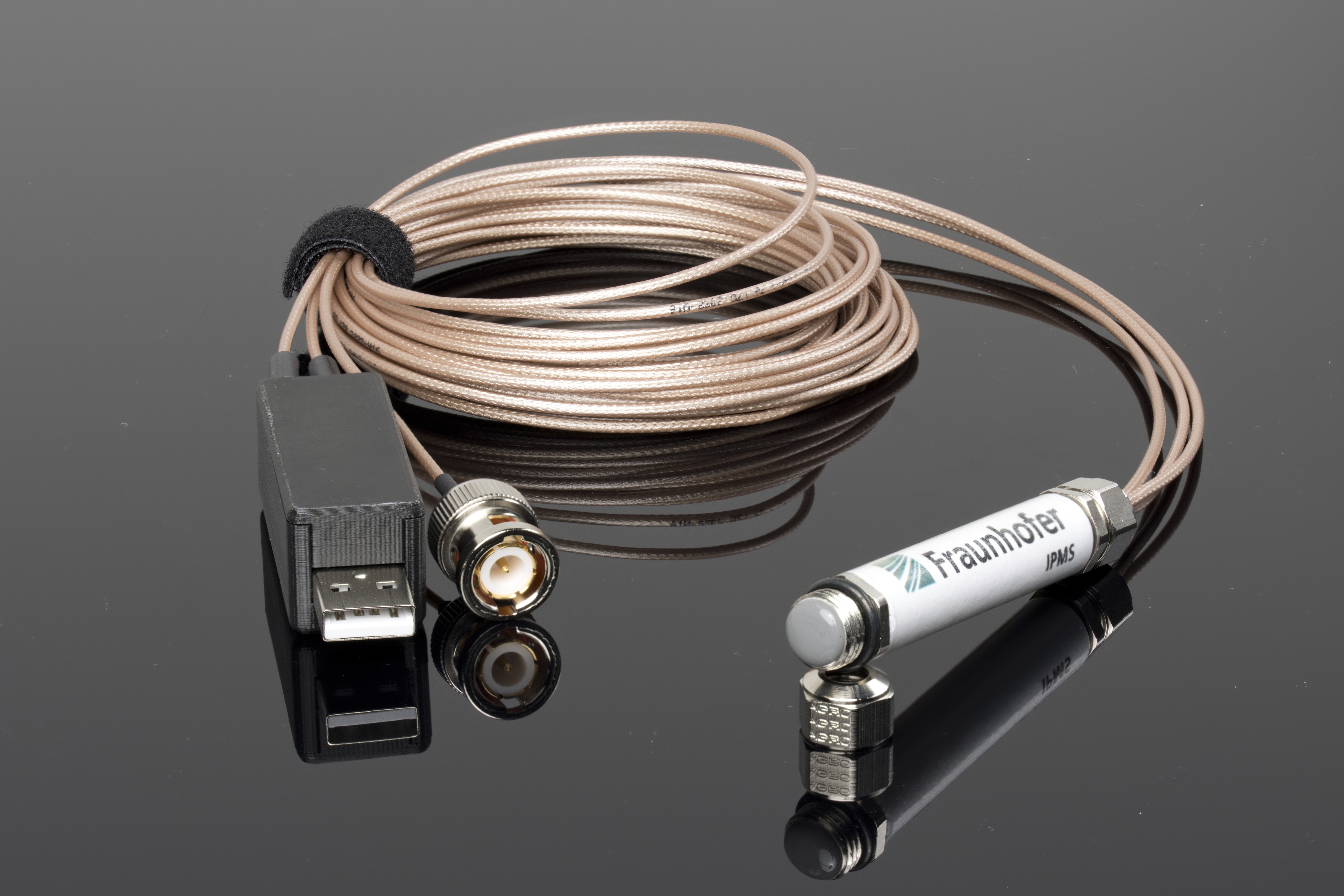
Hydrophones are at the heart of acoustic measurement technology: they measure underwater sound in offshore wind farms, monitor marine ecosystems, and are indispensable in industrial measurement applications, for example for the characterization of ultrasonic transducers in test laboratories or for photoacoustic techniques, where pulsed laser radiation generates acoustic signals that must be detected with high precision.
For all these applications, high acoustic bandwidth is crucial: it enables the accurate capture of short pulses, transient acoustic signals, and broadband spectra – precisely where conventional solutions reach their limits.
Today, lead-containing piezoelectric transducers dominate the market. They conflict with EU environmental regulations (RoHS), are inherently limited in bandwidth due to their design, and are difficult to adapt to different measurement tasks. Laser-based alternatives can achieve high precision, but they are significantly more expensive and are poorly suited for harsh operating conditions.
The KUCHN project focuses on CMUT technology – miniaturized silicon chips with vibrating membranes, similar to those used in smartphone microphones. Their key advantage is that the membrane geometry can be precisely defined using lithographic processes, enabling significantly higher acoustic bandwidth compared to piezoelectric solutions. The chips are lead-free, can be manufactured cost-effectively using semiconductor fabrication processes, and can be flexibly scaled to different frequency ranges and applications.
Within the project, 13 hydrophone demonstrators will be built, calibrated, and provided to selected end users for evaluation. Qualified customer feedback will directly contribute to the development of a viable business model for small-series production.
Objectives
- Build and calibrate 13 CMUT hydrophone demonstrators, including the creation of industry-ready datasheets and cost calculations for small-series production
- Obtain qualified customer feedback through direct sampling with end users from marine monitoring, shipbuilding, and research sectors
- Develop a concrete business model for lead-free CMUT hydrophones as a market-ready product in cooperation with industrial partners