 High Performance Center »Functional Integration in Micro- and Nanoelectronics«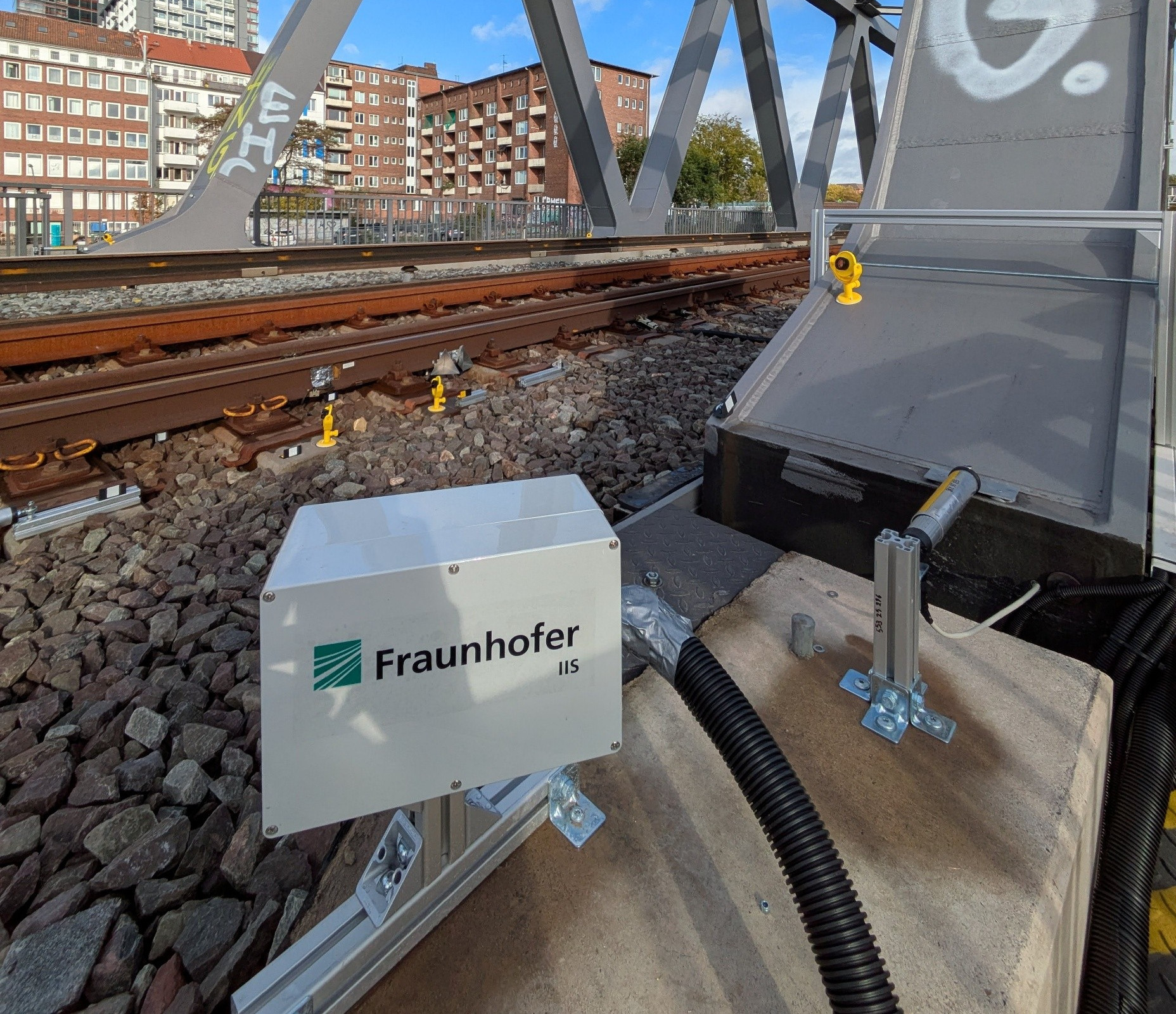
Railway infrastructure assets such as tracks, bridges, retaining walls, and other civil structures may undergo subtle movements or deformations over time due to temperature variations, material aging, or nearby construction activities. Detecting these changes at an early stage is essential to prevent long-term damage, service disruptions, or costly maintenance interventions.
Conventional structural monitoring systems typically rely on sensors installed directly on the structure. Such systems are often expensive to deploy, frequently require track closures during installation, and provide measurements only at discrete locations.
Fraunhofer IIS/EAS is developing a radar-based sensing solution that addresses these limitations by enabling simple installation, contactless operation, and continuous area-wide monitoring. The system is based on microelectronic radar components originally developed for the automotive industry. Through targeted adaptations, these components are transformed into cost-effective sensors for monitoring critical infrastructure.
Within the RailSense project, a long-term measurement campaign will provide quantitative evidence of the radar system's ability to detect minute structural movements from a safe stand-off distance. The project aims to benchmark the radar sensor against established reference instrumentation, thereby demonstrating its performance and fostering confidence in this innovative monitoring technology among railway infrastructure stakeholders.
Objectives
- Define suitable measurement scenarios and identify the operational capabilities and limitations of radar sensors for railway infrastructure monitoring.
- Establish a benchmark dataset comparing radar measurements with reference sensors based on a continuous long-term monitoring campaign.
- Publish a white paper on the application of radar sensing for railway infrastructure monitoring.